DIY cleaners: simple recipes and when not to use them
DIY cleaners made from white vinegar, baking soda, dish soap and water handle a lot of everyday cleaning: a half-and-half vinegar spray for glass and tile, warm soapy water for most sealed surfaces, and a baking soda paste for scrubbing. They're cheap and easy to mix. They also have limits: vinegar etches stone and dulls waxed wood, and none of them should ever be mixed with bleach.
Homemade doesn't mean gentle on every surface. Match the recipe to what you're cleaning.
What do you need?
- White distilled vinegar
- Baking soda
- A mild dish soap
- Warm water, distilled if your tap water leaves spots
- Two or three spray bottles, labeled
- Microfiber cloths
What are the basic recipes?
| Cleaner | Recipe | Use it on | Keep it off |
|---|---|---|---|
| Vinegar spray | One part white vinegar, one part water | Glass, ceramic tile, laminate counters, chrome | Marble, granite, waxed wood, cast iron |
| Soapy water | A few drops of dish soap in warm water | Sealed wood, painted walls, most counters, vinyl | Electronics |
| Glass cleaner | One part vinegar, four parts water | Windows, glass tables | Screens |
| Scrub paste | Baking soda with a little water | Sinks, tubs, stovetops, grout | Glossy or soft finishes, gold-tone fixtures |
| Carpet freshener | Plain baking soda, sprinkled and vacuumed after an hour | Carpets, rugs | Wet carpet |
Spray onto the cloth for anything near wood, fabric or electronics, not onto the surface.
How do you use them in the living room?
- Glass tables and windows: the glass cleaner and a dry microfiber cloth. Our window guide covers the streak-free method.
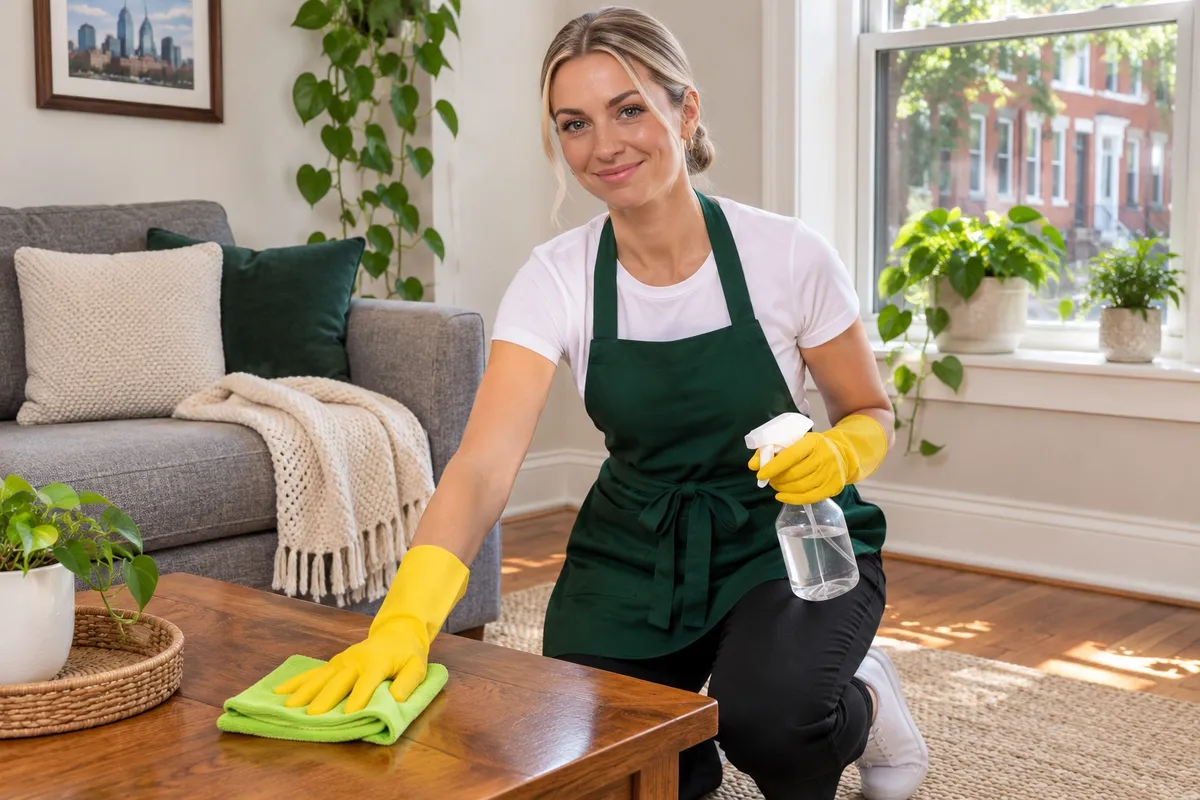
- Wood furniture: a cloth barely damp with soapy water, then a dry cloth. No vinegar on waxed or oiled finishes.
- Upholstery: check the cleaning code first. Our upholstery guide explains the codes.
- Rugs: baking soda, an hour, then a slow vacuum.
What should you never mix?
- Bleach and vinegar: releases chlorine gas.
- Bleach and ammonia: releases chloramine gas.
- Vinegar and baking soda in one bottle: they fizz and mostly cancel out. Use one, rinse, then the other.
- Hydrogen peroxide and vinegar in one bottle: forms an irritating acid. Use them separately.
Keep a window open whenever you clean, and store everything labeled, up high and out of reach of kids and pets.
Are homemade cleaners disinfectants?
No. Vinegar and baking soda clean, but they aren't registered disinfectants. For germs on high-touch surfaces during cold and flu season, use a disinfectant made for the job and follow its label for contact time. Our high-touch surfaces guide covers that.
Want a cleaning booked?
Book House Cleaning online, and put your priorities in your booking notes.
FAQ
What is a good homemade all-purpose cleaner? Mix one part white vinegar with one part water in a spray bottle for sealed, non-stone surfaces like laminate counters, glass and tile. For a gentler everyday spray, use warm water with a few drops of dish soap.
What should you not clean with vinegar? Keep vinegar off natural stone like marble and granite, unsealed grout, waxed or oiled wood, cast iron, and the rubber seals on appliances. The acid can etch, dull or wear them down.
Is it safe to mix homemade cleaners? Never mix bleach with vinegar or ammonia; the combination releases harmful gas. Mixing vinegar and baking soda in a bottle mostly cancels both out, so use them one after the other, not together.
How long does a homemade cleaner last? Make small batches. Vinegar and water keeps for weeks, but anything with dish soap or plant-based additions is best mixed fresh, and every bottle should be labeled with what's in it.
Book a cleaning
Our service area: every Philadelphia neighborhood, plus the Pennsylvania suburbs within about 30 miles of Center City, in Montgomery, Delaware, Bucks and Chester counties. Book online at phillyscleanteam.com/book-now, or call or text (215) 798-7576, 9 AM to 9 PM, every day.