How to disinfect high-touch surfaces in your living room
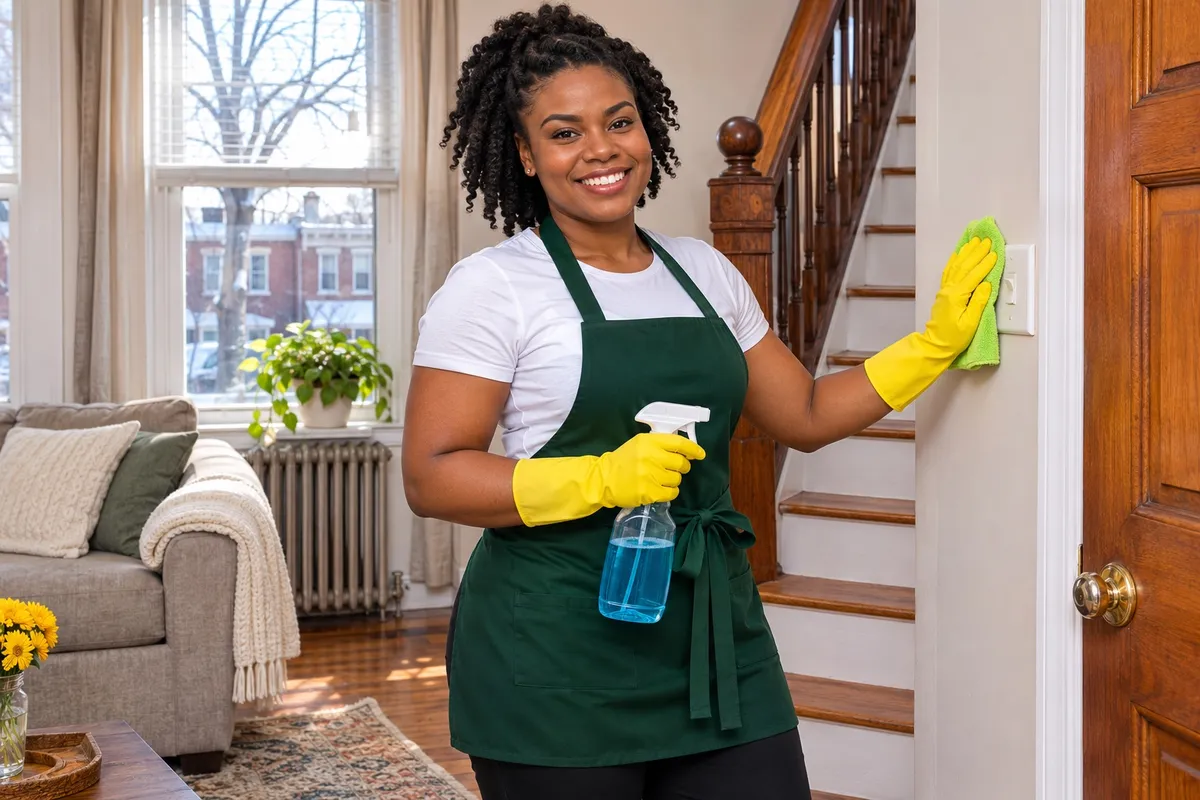
To disinfect high-touch surfaces, clean them first with soap and water, then apply a registered disinfectant and leave it wet for the full contact time printed on the label before you wipe or let it air dry. In a living room, that means door handles, light switches, remotes, the stair railing, phone and tablet cases, and the arms of the couch.
Do it weekly, and daily when someone is sick.
What's the difference between cleaning and disinfecting?
Cleaning takes the dirt off. Disinfecting kills germs on what's left. They're two separate steps, and the order matters: disinfectant sprayed on a grimy surface spends itself on the grime.
So every surface in this post gets the same two moves. Wipe it clean with warm water and a drop of dish soap, then disinfect it.
Which surfaces in a living room count as high-touch?
Walk the room and touch what you touch on an ordinary day:
- The front door handle, inside and out, and the deadbolt
- Light switches and the wall plate around them
- The TV remote, the game controllers and the speaker buttons
- The stair railing and the newel post at the bottom
- Lamp switches and pull chains
- The arms of the couch and chairs
- The coffee table edge, where hands land
- Phone and tablet cases
- The thermostat
- Window locks and blind wands
In a lot of Philadelphia rowhomes the front door opens straight into the living room, and the stairs come down into it too. That puts the outside door handle, the railing and the main light switch all in one room, and they get touched by everyone, every day.
How do you disinfect high-touch surfaces the right way?
- Read the label. Look for the contact time, the surfaces it's safe on, and whether it needs a rinse. Wear gloves.
- Clean first. Wipe each surface with warm, soapy water and wring the cloth well. Dry it.
- Apply the disinfectant. Spray the surface or use a wipe. Use enough to leave it visibly wet.
- Wait the full contact time. This is the step people skip. If the label says four minutes, the surface stays wet for four minutes. If it dries early, apply more.
- Wipe or air dry, as the label says. Anything that touches food or little kids' mouths may need a rinse with clean water.
- Wash up. Toss disposable wipes, put cloths straight in the wash, take off the gloves and wash your hands.
Work from the cleanest surface to the dirtiest so you aren't carrying germs from the door handle to the remote.
Never mix bleach with ammonia, vinegar or any other cleaner. The fumes are dangerous.
How do you clean electronics without wrecking them?
Power them off first, and take batteries out of remotes.
- Remotes and controllers: a cloth dampened with rubbing alcohol, wrung nearly dry. A cotton swab gets between the buttons.
- Phone cases: take the phone out and wash the case, or wipe it with alcohol.
- The TV screen: a dry microfiber cloth only. Nobody is touching the middle of the screen, so it doesn't need disinfectant, and alcohol can damage some screen coatings.
- Speakers and smart displays: a barely damp cloth on the buttons. Keep liquid out of the openings.
Spray the cloth, never the device.
What about fabric surfaces?
Couch arms and throw blankets are high-touch too, but you can't spray disinfectant on most upholstery without staining it. Wash throws and removable covers on the warmest setting their care tag allows. For the couch itself, vacuum it, then spot-clean the arms according to the care tag. Our guide to deep cleaning a living room covers the care-tag codes.
How often should you do it?
- A normal week: clean and disinfect the high-touch list once.
- When someone's sick: once a day until they're better, plus the bathroom faucet and the fridge handle.
- After guests: once, when everyone's gone.
There's no reason to disinfect the whole house every day. Spend the time on the surfaces hands touch, and keep the rest of the room clean the ordinary way.
Should you book a cleaning in cold and flu season?
If the household is run down, a regular clean takes one more job off the list. Book House Cleaning or Deep Cleaning online, and if there are surfaces you care about, ask about them when you book and put them in your booking notes.
FAQ
What is the difference between cleaning and disinfecting? Cleaning removes dirt, grease and grime with soap and water. Disinfecting uses a product registered to kill germs on a surface. Disinfectant works on a clean surface, so clean first, then disinfect.
How long do you leave disinfectant on a surface? As long as the label says. That's the contact time, and it varies by product. The surface has to stay wet the whole time, so spray enough and don't wipe it off early.
How do you disinfect a TV remote? Take the batteries out, then wipe the remote with a cloth dampened with rubbing alcohol or a disinfecting wipe that's been squeezed out so it isn't dripping. Get between the buttons with a cotton swab and let it dry before the batteries go back in.
How often should you disinfect high-touch surfaces at home? Wipe door handles, switches, remotes and railings once a week. When someone in the house is sick, do the same surfaces every day until they're better.
Book a cleaning
Our service area: every Philadelphia neighborhood, plus the Pennsylvania suburbs within about 30 miles of Center City, in Montgomery, Delaware, Bucks and Chester counties. Book online at phillyscleanteam.com/book-now, or call or text (215) 798-7576, 9 AM to 9 PM, every day.